- The Industrai
- Posts
- The Latest AI News + The AI Model War: Gemini 3 vs. Claude Opus 4.5 vs. GPT-5.1
The Latest AI News + The AI Model War: Gemini 3 vs. Claude Opus 4.5 vs. GPT-5.1
The past three weeks have been wild

Jonathan Buckelew
December 02, 2025 • Estimated Reading Time: 14 minutes
The Commercial Real Estate Industry and the professionals who work within it are at a really interesting place right now and are starting to take advantage of it.
AI has the chance to cut out a big portion of the manual, time-intensive work we do, and allow us to spend more time on bigger, more meaningful analysis and decision-making.
This week, I want to cover two things:
A quick roundup of the biggest AI news from November (with links so you can dig deeper)
A head-to-head comparison of the three frontier AI models that just dropped: Google Gemini 3, Claude Opus 4.5, and GPT-5.1
Let's get into it.

The Biggest AI News from November 2025
A lot happened in AI over the past few weeks. Here's what matters most:
Nvidia became the first company in history to hit a $5 trillion valuation. To put that in perspective: Nvidia is now worth more than the entire stock markets of most countries. Why? Because every AI model needs their chips, and every chip needs a data center to run in.
Anthropic announced $50 billion in U.S. data center investments - starting with custom facilities in Texas and New York. These aren't your standard data centers. They're AI-optimized campuses designed for training and running the next generation of Claude models. The first sites go live in 2026, creating 800 permanent jobs and 2,400 construction jobs.
Amazon completed an $11 billion data center campus for Anthropic in Indiana. This is 30 interconnected data centers on 1,200 acres - already operational while competitors are still in planning stages. That's the scale we're talking about.
Brookfield launched a $10 billion AI infrastructure fund backed by Nvidia and Kuwait. Wall Street is calling data centers "the new oil rigs" - and the biggest players are betting accordingly.
OpenAI signed a $38 billion deal with AWS for cloud infrastructure. This is OpenAI's first major partnership outside of Microsoft and signals just how much compute power these companies need.
Here's why this matters for CRE: Data centers have become one of the fastest-growing real estate asset classes. Blackstone alone has invested over $100 billion into data centers and related infrastructure. Office-to-data-center conversions are happening (Nvidia just leased a vacant San Jose office building to build a data center). Power-rich land is now premium real estate.
Other Headlines Worth Knowing
Anthropic is now valued at $350 billion after Microsoft invested $5 billion and Nvidia invested $10 billion. Claude is now available on all three major clouds (AWS, Google Cloud, and Azure) - the only frontier AI model with that reach.
Claude Opus 4.5 launched on November 24th with leading performance in coding and agentic tasks. They also cut the price by two-thirds, making it much more accessible.
GPT-5.1 launched on November 12th with improved conversational abilities and new personality customization options.
Google Gemini 3 launched on November 18th with over 1 million users in the first 24 hours.
Now let's break down what makes each of these models different - and which one you should actually use.
Before I get into the three big models, a quick word from today’s sponsor: Cinch
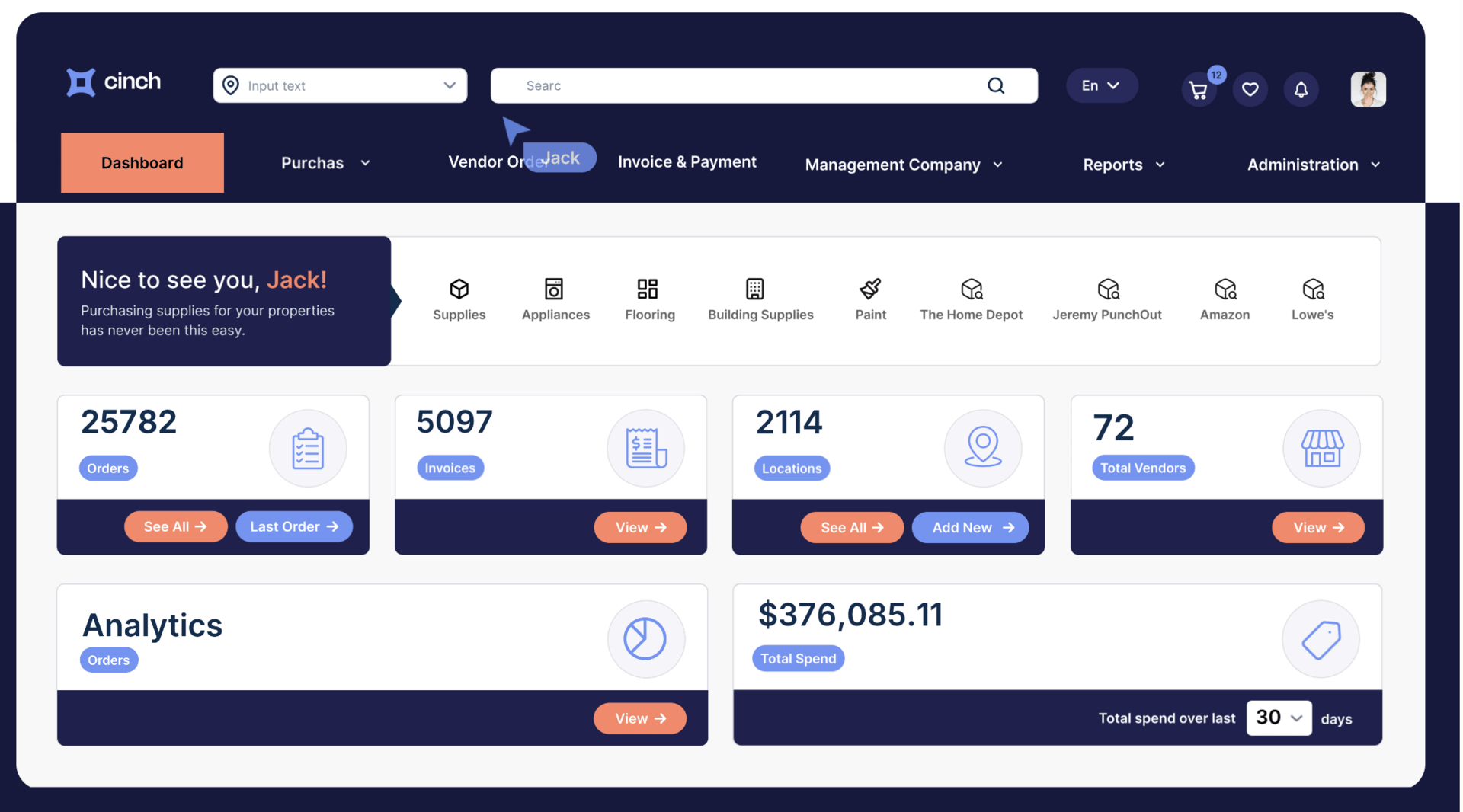
Cinch reached out to me two weeks ago when I was talking about a maintenance problem on LinkedIn and after getting access to their sandbox account, I’m a fan.
Cinch (Procurement Software for Property Management - Cinch) is a procurement platform built specifically for property management that brings multiple vendors into one place with built-in price comparison.
What caught my attention: you get access to multiple vendors with quick delivery (no more backorder headaches), smart budget controls with tailored logins and approval workflows for your team, and allocation down to the unit, GL code, and occupancy status for every line item - which is gold for asset manager reporting. You can also create custom catalogs of approved products, access exclusive vendor promotions, and get real-time visibility into spending and order status across your entire portfolio.
If you're tired of juggling multiple vendor accounts and want better control over procurement spending, check out Cinch.
The Big Three: Head-to-Head Comparison
For the first time, we have three legitimately impressive frontier AI models that all launched within two weeks of each other. Here's what you need to know about each:
Google Gemini 3
Released: November 18, 2025
What's New
Gemini 3 is Google's most intelligent model yet, and it's built to understand what you're actually asking for.
The big upgrade: intent understanding. Google says it's "much better at figuring out the context and intent behind your request, so you get what you need with less prompting."
Key Strengths
State-of-the-art reasoning with the ability to synthesize text, images, video, audio, and code
Google Search integration means access to fresh, real-time web data
Native Google Workspace integration - works directly in Gmail, Docs, and Sheets
Free to use through the Gemini app (gemini.google.com)
Three CRE Use Cases for Gemini 3
1. Real-Time Market Research
Because Gemini runs on Google's infrastructure, it has access to fresh web data. Ask it to research a submarket you're considering for acquisition - it can pull recent comparable sales, analyze demographic trends, identify major employers, and flag risks like supply pipeline or rent control legislation. The Search integration makes this genuinely useful for current market intel.
2. Multimodal Property Analysis
Upload a rent roll, a T12, property photos, and a market report - then ask Gemini to give you an investment summary. Because it can process text, images, and data together, it actually connects the dots between all those inputs. Construction progress analysis works the same way - upload site photos from different dates and ask it to describe progress and flag potential issues.
3. Lease Abstract Analysis
Upload a lease and ask Gemini to summarize key terms, identify non-standard clauses, and compare against your template. The improved reasoning means it catches nuances that older models missed - like understanding that a 3% annual escalation with a CPI floor is different from a flat 3% escalation.
Claude Opus 4.5
Released: November 24, 2025
What's New
Anthropic positioned Opus 4.5 as "the best model in the world for coding, agents, and computer use." This is less about chatting and more about actually doing things.
The big upgrades: Claude for Excel and Claude for Chrome. These aren't just integrations - they're full-blown AI agents that can work directly in your tools.
Opus 4.5 also introduced an "effort" parameter that lets you control how much thinking the model does. For simple tasks, it responds quickly. For complex analysis, it takes more time and delivers deeper output.
Key Strengths
Claude for Excel - AI that lives in a sidebar in Excel, can read multi-tab workbooks, fix formulas, explain calculations with cell-level citations, and build models from scratch
Claude for Chrome - AI that can see your browser, click buttons, fill forms, and complete tasks across websites
Best-in-class for agentic workflows - tasks that require multiple steps and sustained reasoning
Improved memory for long-context operations and complex projects
Three CRE Use Cases for Claude Opus 4.5
1. Financial Modeling in Excel (Claude for Excel)
This is a game-changer. Claude for Excel sits in a sidebar within Microsoft Excel and can read, analyze, and modify your workbooks. Upload your acquisition model and ask Claude to explain how specific cells are calculated, identify circular references, or update assumptions across your entire model while preserving all formula dependencies. It tracks every change and gives you cell-level citations so you can verify the work.
For CRE professionals: ask it to build a DCF model from scratch, debug errors in your cap rate calculations, or populate a template with new property data while maintaining all your existing formulas. It's like having a financial analyst on call 24/7.
2. Browser-Based Due Diligence (Claude for Chrome)
Claude for Chrome can see what you see in your browser and take actions on your behalf. For CRE workflows, this means you can ask Claude to research a property address across multiple county records sites, pull data from CoStar, and compile findings into a summary - all without you clicking through each site manually.
It can also help with routine tasks like filling out offering forms, scheduling property tours across multiple calendars, or drafting email responses to broker inquiries based on what you're looking at in your inbox.
3. Complex Document Analysis and Drafting
Opus 4.5 excels at tasks that require sustained reasoning across long documents. Upload a PSA, operating agreement, and loan docs together and ask Claude to create a comprehensive closing checklist, identify conflicting provisions between documents, or draft investor communication that synthesizes information from all sources. The improved memory means it maintains context across 200,000 tokens - enough for dozens of complex documents.
GPT-5.1
Released: November 12, 2025
What's New
OpenAI focused GPT-5.1 on making ChatGPT more conversational and customizable. This update addresses complaints that GPT-5 felt "robotic" - the new version is warmer by default and better at following your specific instructions.
The big upgrades: Two modes (Instant and Thinking) that adapt to task complexity, plus 8 personality presets that let you customize how ChatGPT responds.
GPT-5.1 Instant responds quickly for simple tasks. GPT-5.1 Thinking takes more time for complex problems. An "Auto" mode routes each question to the best option automatically.
Key Strengths
Adaptive reasoning - automatically decides how much thinking time each question needs
Highly customizable tone - choose from Default, Professional, Friendly, Candid, Quirky, Efficient, Nerdy, or Cynical personalities
Best instruction-following - if you ask for exactly 6 bullet points, you get exactly 6 bullet points
Warmer, more natural conversation than previous versions
Three CRE Use Cases for GPT-5.1
1. Investor Communication Drafts
GPT-5.1's improved instruction-following and tone customization make it excellent for drafting investor updates, distribution notices, and market commentary. Set the personality to "Professional" and give it your property performance data - it will structure the information logically and match a polished tone. The adaptive reasoning means it takes appropriate time on nuanced situations (explaining a capital call) vs. routine updates (monthly distributions).
2. Tenant and Broker Communication
The personality presets are genuinely useful here. Use "Friendly" for tenant correspondence, "Professional" for institutional broker outreach, or "Efficient" when you need quick, no-fluff responses. The improved instruction-following means you can specify exactly what you need ("keep it under 150 words, include a call to action, mention the recent renovation") and actually get that output.
3. Quick Research and Summarization
GPT-5.1 Instant is fast - noticeably faster than the other models on simple tasks. For quick questions during a call ("what's the average cap rate for Class B multifamily in Phoenix?"), market research summaries, or rapid-fire Q&A during due diligence, the speed advantage is real. It decides when to think deeply and when to just give you the answer.
Which Model Should You Actually Use?
Here's my take after spending time with all three:
Use Gemini 3 when:
You need real-time market data and web research
You're already in the Google ecosystem (Workspace, Gmail, Docs)
You want a free, capable option for general analysis
You're doing multimodal work (photos + data + documents together)
Use Claude Opus 4.5 when:
You work extensively in Excel and want AI that actually understands spreadsheets
You need an AI agent that can take actions in your browser
You're doing complex analysis that requires long context and sustained reasoning
You're building workflows that require multiple steps and tool use
Use GPT-5.1 when:
You prioritize conversational quality and want customizable tone
You need fast responses for simple questions
You're drafting communications where specific tone matters
You want the most natural-feeling back-and-forth conversation
My honest recommendation: Don't pick one. Use all three strategically based on the task. The good news is Gemini 3 is free, GPT-5.1 is included in ChatGPT Plus ($20/month), and Claude Opus 4.5 pricing just dropped significantly.
Pro-Tip: How to Get Better Results from Any Model
The key to getting great output from any AI tool is context.
Don't just ask: "Analyze this lease."
Instead, try: "I'm the asset manager for a 200-unit multifamily property in Dallas. Analyze this new lease and tell me how the terms compare to our current standard lease, specifically focusing on rent escalations, renewal options, and early termination rights. Flag anything that could negatively impact our ability to sell the property in 3 years."
The Bottom Line
We're in a golden age for AI tools in commercial real estate. Three legitimately impressive models launched within two weeks of each other, each with distinct strengths:
Gemini 3 for research and Google integration
Claude Opus 4.5 for Excel, browser automation, and complex analysis
GPT-5.1 for conversational quality and customizable communication
Is any of them perfect? No. You still need to verify outputs, especially for anything that goes to investors or into a legal document.
But as first-pass analysis tools, research assistants, and draft generators - the options have never been better.
There are a lot of different AI tools out there. I'd recommend giving all three a try this week and finding your own workflow.
AI is moving fast. My goal is to help the Real Estate Industry keep up.
Hope you enjoyed this.
Jonathan
Founder, The IndustrAI